At DeepRoots, we simplify the teachings of Sanskrit shlokas, making them easy to understand. These ancient verses offer powerful guidance for personal growth, helping you connect with your cultural roots. Sanskrit shlokas inspire and guide your journey through life, offering wisdom that stands the test of time.
At DeepRoots, we simplify the teachings of Sanskrit shlokas, making them easy to understand. These ancient verses offer powerful guidance for personal growth, helping you connect with your cultural roots. Sanskrit shlokas inspire and guide your journey through life, offering wisdom that stands the test of time.
Introduction: A Stotra That Shields, Heals & Awakens
In a world full of noise, distractions, and unseen energies, ever wondered if there’s something that silently protects you?
Ram Raksha Stotra—an ancient kavach, written by Rishi Budha Kaushika—is not just a devotional hymn. It’s a spiritual firewall. Sadly, in many homes today, it has faded into forgotten verses.
But those who know its power… know that this stotra is Shri Ram himself, protecting you like a divine armor.
“Yeh sirf paath nahi hai—yeh ek raksha kavach hai jo apko har disha se suraksha deta hai.”
This line opens the heart. It’s a surrender—an offering of oneself into Ram’s hands. Secret Meaning: Repeating different names of Bhagwan Ram here reflects his multi-dimensional presence—as son, warrior, king, and dharma.
Hinglish Insight: “Naam badalte hain, lekin Ram ki kripa har roop mein constant rehti hai.”
2. आदौ राम तपोवनादि गमनं…
“Aadau Rama Tapovanadi Gamanam…”
These verses recount Ram’s life events—not as history, but as an inner journey every seeker must walk:
Leaving the comfort zone (Ayodhya)
Embracing challenges (Vanvaas)
Facing demons (both inner and outer)
Triumph through truth (returning with Sita and glory)
Yogic Symbolism: Ram’s life = a blueprint for mental, emotional, and spiritual evolution.
3. रामो राजमणिः सदा विजयते रामं रमेशं भजे ।
“Ramo Rajamaniḥ Sada Vijayate, Ramaṁ Rameshaṁ Bhaje”
Here, Shri Ram is called Rajamani – the jewel among kings, and also Ramesh – master of Lakshmi.
Secret Meaning: When you chant this shloka with bhakti, you’re activating victory consciousness. It’s not about winning over others—it’s about conquering fear, doubt, and tamas inside you.
Hinglish Thought: “Yeh vijay ka mantra hai—lekin asli vijay toh apne ‘man’ pe jeet paane mein hai.”
4. रामो दाशरथिः शूरो लक्ष्मणेन संयुतः ।
“Ramo Dasharathih Shuro Lakshmanena Samyutah”
This shloka reinforces the support system of Dharma. Ram doesn’t stand alone. His strength is also in his sangha—Lakshman, Sita, Hanuman.
Spiritual Takeaway: To walk the path of dharma, you need self-discipline + divine company + inner courage.
Life Tip: “Sahi saath ho, toh Ram ka marg bhi asaan lagta hai.”
5. एतां रामबलोपेतां रक्षां यः सुथिरं पठेत् ।
“Etam Ramabalopetam Rakshaam Yah Sthiram Pathet”
This is the promise. Whoever recites this regularly and with faith, is protected by the very strength of Shri Ram.
Not metaphorically—but energetically, this mantra realigns your aura, nervous system, and thoughts to vibrate on Ram-frequency.
Why Chanting Ram Raksha Daily Changes Your Life
Shields you from negative energies
Brings emotional stability and fearlessness
Improves focus and spiritual clarity
Deepens your bhakti for Bhagwan Ram
Acts as a subtle yet powerful affirmation of inner strength
“Ek baar Ram Raksha ka abhyas shuru karo—jeevan ka drishti aur disha dono badal jaayegi.”
Final Thoughts: The Stotra That Remembers You
Ram Raksha is not a relic of the past. It is a living mantra, waiting to rise again in your life.
When chanted with shraddha and surrender, it not only protects you—it reminds you of who you truly are:
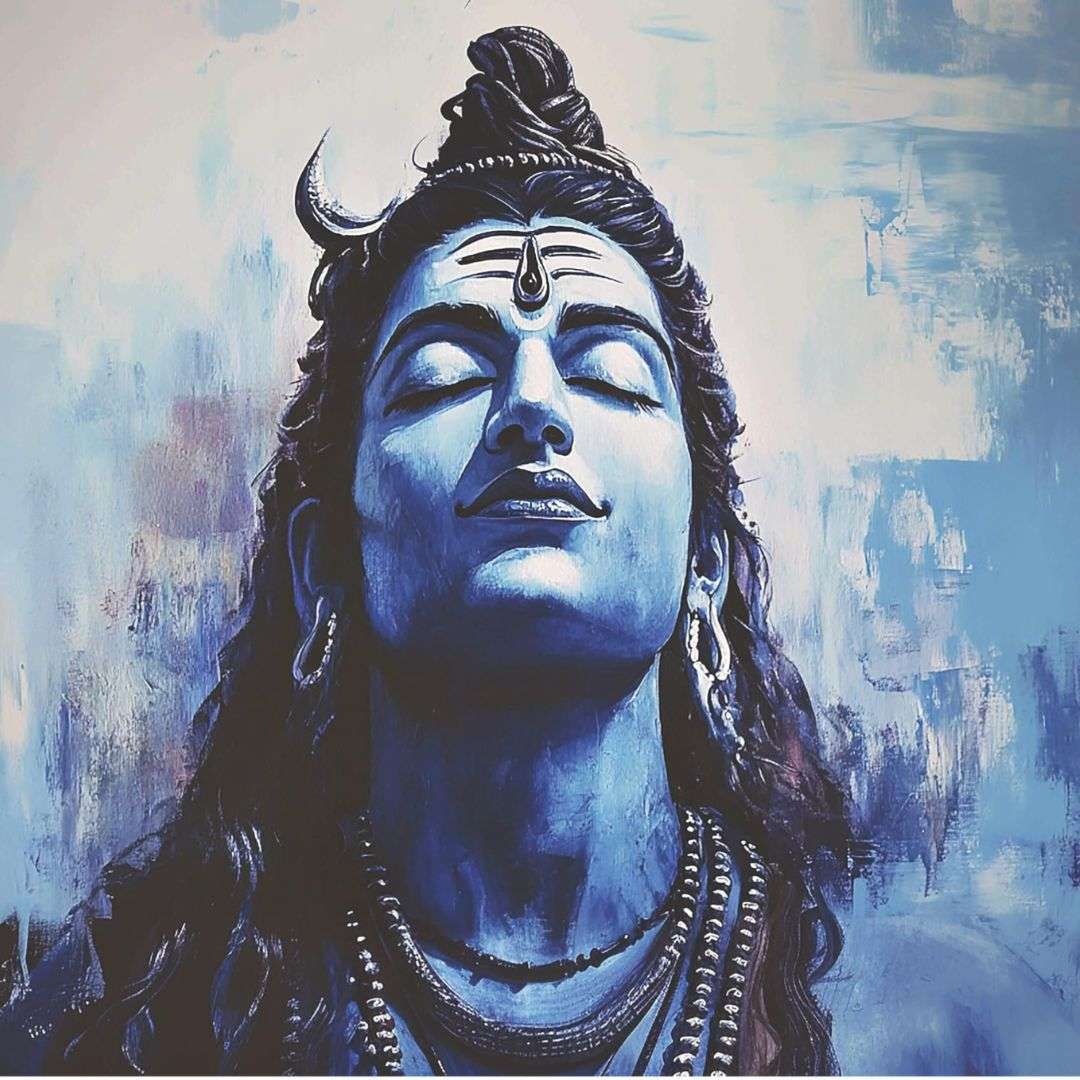
ehte hai, lekin kya aap jaante ho—Shiva is also the first Yogi, the Adi Yogi, and the origin of meditation itself?
Often, when we chant shlokas or mantras like “Om Namah Shivaya”, we approach it from a space of devotion. But what if every syllable was also a code for awakening the yogi within you?
This blog dives deep into the lesser-known yogic meanings of Shiva shlokas—where bhakti meets bodh, and chanting becomes a form of inner transformation.
1. Om Namah Shivaya – The Five-Fold Purification
ॐ नमः शिवाय Om Namah Shivaya
This is not just a greeting to Bhagwan Shiva—it’s a pancha-bhuta mantra, cleansing the five elements:
Na – Earth (Prithvi)
Ma – Water (Jal)
Shi – Fire (Agni)
Va – Air (Vayu)
Ya – Ether (Aakash)
🧘♀️ Yogic Secret: When chanted consciously, this mantra purifies your body’s elemental structure—body detox nahi, soul detox hai ye!
2. Mahamrityunjaya Mantra – A Call to Transcend Death
This verse invokes Shiva as Tryambaka, the three-eyed one, who sees past, present, and future.
🧘♂️ Hidden Meaning: The “urvarukamiva bandhanan” line speaks about breaking free like a ripe fruit falling from the vine—not forced, but natural. It isn’t just about physical death—it’s about freedom from bondage, from ego, from attachment.
Hinglish Insight: “Shiv yeh nahi kehte ki maut se daro… woh kehte hai ki jeene ke tareeke badlo.”
This chant from the Sri Rudram is often used in rituals, but yogically it connects you to your inner fire—Rudra is your disciplined, awakened self, not just an outer deity.
Yogic Secret: The Rudram invokes 11 forms of Rudra—each symbolic of a stage in spiritual discipline. This is Shiva as a mirror to your own potential.
“Yeh mantra humari andar ki neend todta hai—jagata hai!”
This verse paints a picture of Shiva, but from a yogi’s eye, this is a visualization practice. His 10 arms symbolize mastery over 5 senses and 5 elements.
Yogic Perspective: When you chant this, you’re aligning your energy centers (chakras) and awakening the third eye—not metaphorically, but through actual focus on Ajna Chakra.
Conclusion: The Real Shiv Bhakt is a Yogi in Disguise
Whether you’re doing japa, dhyana, or just feeling drawn to Shiva’s energy—you’re not just worshipping. You’re being called.
Every Shiva shloka is a doorway into your inner Himalaya, where silence speaks louder than sound, and awareness is the true offering.
“Shiv bhakti aur yog – dono ka milan hi hai mukti.”
Ready to Go Deeper into Shiv Consciousness?
Join our online classes for Shiv Tandav Stotram and Shiv Manas Puja—not just to chant, but to feel Mahadev’s energy through every syllable.
🕉️ Learn the correct pronunciation, inner meanings, and chanting techniques with guided support.
Ever wished you could understand the essence of the Bhagavad Gita without going through all 700 verses? Don’t worry — hum yahan hain to help you out! In this blog, we bring you 18 carefully chosen shlokas, one from each chapter of the Gita, that capture its core teachings — perfect for seekers, students, or anyone just curious about Gita ka saar (essence of the Gita).
Whether you’re new to the Gita or looking for a quick refresher, this blog is your go-to Bhagavad Gita summary in 18 verses. Let’s dive into the Gyaan ki duniya — in a simple, soulful, and meaningful way. 🌼
🌟 Why Just 18 Shlokas?
Because the Gita itself has 18 chapters — each with a distinct theme and purpose. These 18 shlokas offer a crystal-clear path of karma (action), bhakti (devotion), and jnana (knowledge). They’re not just spiritual wisdom, but also life ka manual for managing emotions, relationships, and self-growth.
📖 Gita in 18 Shlokas – Chapter-Wise Breakdown
Here’s one powerful shloka from each chapter of the Bhagavad Gita, complete with English meaning and essence.
1. Chapter 1: Arjuna Vishada Yoga
Shloka 1.28 “Drishtvemaṁ svajanaṁ kṛṣṇa yuyutsuṁ samupasthitam…” Translation: Seeing my relatives arrayed for battle, my limbs fail and my mouth goes dry. 👉 Essence: Arjuna’s emotional breakdown — the starting point of Gita’s wisdom.
2. Chapter 2: Sankhya Yoga
Shloka 2.47 “Karmanye vadhikaraste ma phaleshu kadachana…” 👉 Essence: You have the right to perform your duty, but not to the results. Karma karo, fal ki chinta mat karo.
3. Chapter 3: Karma Yoga
Shloka 3.21 “Yad yad acharati shreshtas…” 👉 Essence: The actions of great people set the standard for others. Jo bade karte hain, wahi chhote seekhte hain.
4. Chapter 4: Jnana Karma Sanyasa Yoga
Shloka 4.7 “Yada yada hi dharmasya…” 👉 Essence: Bhagwan comes whenever adharma rises. Satyamev jayate, always!
5. Chapter 5: Karma Sanyasa Yoga
Shloka 5.10 “Brahmanyadhaya karmani…” 👉 Essence: Perform duties without attachment, like a lotus in water.
6. Chapter 6: Dhyana Yoga
Shloka 6.5 “Uddhared atmanātmānaṁ…” 👉 Essence: You are your own friend or enemy. Apne aap ko uplift karo!
7. Chapter 7: Jnana Vijnana Yoga
Shloka 7.7 “Mattah parataram nanyat…” 👉 Essence: Nothing is beyond Me; everything rests in Me like pearls on a thread.
8. Chapter 8: Aksara Brahma Yoga
Shloka 8.5 “Anta-kāle ca mām eva…” 👉 Essence: One who remembers Me at the time of death attains Me. Bhagwan ko yaad rakhna is the ultimate shortcut.
9. Chapter 9: Raja Vidya Yoga
Shloka 9.22 “Ananyas chintayanto mam…” 👉 Essence: I take care of those who are always devoted to Me. Jo mujhe yaad rakhta hai, main uska khayal rakhta hoon.
10. Chapter 10: Vibhuti Yoga
Shloka 10.20 “Aham atma gudakesha…” 👉 Essence: I am the Self in all beings. Main har jagah hoon — bas nazar chahiye.
11. Chapter 11: Vishwarupa Darshana Yoga
Shloka 11.32 “Kaalo’smi loka kshaya krit…” 👉 Essence: I am Time, the destroyer of worlds. Samay sabse bada bal hai.
12. Chapter 12: Bhakti Yoga
Shloka 12.15 “Yasmat no dvijate loko…” 👉 Essence: One who doesn’t disturb others and isn’t disturbed — is dear to Me. Shant aur samvedansheel vyakti sabse priya hota hai.
13. Chapter 13: Kshetra Kshetrajna Vibhaga Yoga
Shloka 13.27 “Samam sarveshu bhuteshu…” 👉 Essence: The one who sees the same Bhagwan in all beings truly sees.
14. Chapter 14: Gunatraya Vibhaga Yoga
Shloka 14.26 “Mam cha yo’vyabhicharena…” 👉 Essence: One who serves Me unconditionally goes beyond the three gunas.
15. Chapter 15: Purushottama Yoga
Shloka 15.7 “Mamaivamso jiva-loke…” 👉 Essence: Every living being is My eternal fragment. Tumhara atma bhi meri hi chhavi hai.
16. Chapter 16: Daivasura Sampad Vibhaga Yoga
Shloka 16.21 “Trividham narakasyedam…” 👉 Essence: Lust, anger, and greed lead to hell. Inse bachke rehna is a must!
17. Chapter 17: Sraddhatraya Vibhaga Yoga
Shloka 17.3 “Shraddhā-mayo’yam purusho…” 👉 Essence: As your faith is, so you become. Jaise vishwas, waisi zindagi.
18. Chapter 18: Moksha Sanyasa Yoga
Shloka 18.66 “Sarva dharman parityajya…” 👉 Essence: Surrender unto Me; I shall deliver you from all sins. Bas mujh par bharosa rakho.
🧠 Final Thoughts: One Gita, Infinite Wisdom
Reading just these 18 shlokas is like taking a shortcut to the ultimate truth. Life is full of confusion, overthinking, and kya sahi kya galat moments. But the Gita gives us clarity, purpose, and inner peace.
So next time you feel lost — open this list, connect with the Bhagavad Gita teachings, and you’ll find the answers waiting for you. ✨
🌿 Ready to Dive Deeper into the Gita? Join our Bhagavad Gita Classes at DeepRoots – Online Shloka Classes and experience the wisdom of each shloka with guided meanings, pronunciations, and real-life applications.
✨ Learn at your pace, from the comfort of your home!
What If You Started Your Day With Shiva’s Blessings?
Mornings can feel rushed—alarm baje, phone uthaya, subah ki chai banayi, aur phir bhaag daud! But imagine starting your day with calm, clarity, and divine energy instead. What if your first words of the day were Shiva mantras?
In this blog, you’ll learn how to include Shiva mantras in your daily morning routine, why it’s important, and how it can shift your mood, mindset, and energy.
Why Include Shiva Mantras in the Morning?
The morning is a sacred time. It sets the tone for the whole day. Chanting Shiva mantras in the early hours helps you:
✅ Clear mental clutter ✅ Feel grounded and focused ✅ Invite positivity and strength ✅ Connect with divine energy ✅ Start your day with devotion (bhakti bhavna)
Shiva is not just a deity—He’s a state of consciousness, a symbol of stillness and transformation. And when your first energy exchange of the day is with Mahadev, duniya ki koi tension aapko hilaa nahi sakti.
Top 5 Shiva Mantras for Your Morning Routine
Here are some powerful Shiva mantras you can include every day. Even chanting just one of these with devotion is deeply effective.
1. ॐ नमः शिवाय – Om Namah Shivaya
Meaning: I bow to Shiva, the inner self. When: Ideal as a daily morning mantra for Lord Shiva. Benefits: Brings calm, balances energy, purifies thoughts.
🕉️ Try this: Chant this 11 or 21 times after waking up. Sit facing east and focus on your breath.
Meaning: A powerful mantra for healing and protection. When: During illnesses, anxiety, or tough times. Benefits: Removes fear of death, ensures safety and longevity.
3. शिव गायत्री मंत्र – Shiva Gayatri Mantra
“Om Tatpurushaya Vidmahe, Mahadevaya Dhimahi, Tanno Rudrah Prachodayat” Meaning: We meditate on the Supreme Being (Shiva), may He guide us. Benefits: Enhances spiritual growth, increases mental clarity.
4. ॐ शिवाय नमः – Om Shivaya Namah
This is a shortened form of Om Namah Shivaya, perfect for quick repetition. Perfect for busy mornings when you’re low on time but high on devotion.
5. Lingashtakam – A devotional hymn describing the glory of the Shiva Lingam
Great for those who prefer sloka-style recitation. You can play it in the background while doing your morning chores or yoga.
How to Create a Simple Shiva Mantra Routine
Chanting doesn’t need to feel like a puja ceremony every day. Even 5 minutes of focused chanting can make a difference.
🕒 Step-by-Step Morning Shiva Mantra Routine
Wake up and freshen up (Take a quick bath if possible)
Light a diya or agarbatti in front of Shiva or a photo
Close your eyes, sit straight, and breathe deeply
Chant one or more of the mantras listed above
Visualize Shiva—sitting in Kailash, blessing you
End with gratitude—say “Thank you, Mahadev, for this new day.”
🧘♀️ Bonus tip: Pair your chanting with light yoga or pranayama to go deeper into the practice.
Too Busy? Here’s How to Still Stay Connected with Shiva
Sabko subah 30 minutes nahi milte, we get it! But that doesn’t mean you skip devotion altogether.
Here’s how to fit Shiva into your day even if you’re super busy:
Say a quick prayer before leaving the house: “Mahadev, aaj ka din aap sambhal lena.”
Listen to Shiva mantras while commuting
Keep a Shiva wallpaper on your phone for daily darshan
Say a quick prayer before leaving the house: “Mahadev, aaj ka din aap sambhal lena.”
What Happens When You Do This Daily?
Chanting Shiva mantras regularly creates a powerful shield of positivity around you. Over time, you’ll notice:
✨ More emotional stability ✨ Increased patience and clarity ✨ Reduced fear and self-doubt ✨ A deeper connection with your spiritual self
And most importantly—you’ll begin the day not with chaos, but with calm and clarity.
Final Thoughts: Your Mornings Deserve a Divine Start
Your mornings shape your mindset, and your mindset shapes your life. So why not make your first energy exchange of the day with Shiva—the Adiyogi, the destroyer of negativity, the calm in the chaos?
Start small. One mantra. One moment of stillness. And let the vibration of Shiva fill your day with grace, strength, and balance.
🌼 Ready to make Shiva mantras part of your everyday life?
Join our online sloka and mantra chanting classes to learn the correct pronunciation, understand the deeper meanings, and build a soulful spiritual routine—guided, simple, and deeply transformational.